
Image via Unsplash

Written by Andre Oentoro at BreadnBeyond. ✔️ Edited by Bonny Isselt.
Introduction: Why Long-Form Blogging With AI Is Good?
With AI-generated content flooding search results and short-form media dominating social feeds.
Does this mean long-form blogging is becoming obsolete? Not at all.
In fact, in-depth, well-researched content is more valuable than ever, both for readers seeking substance and search engines prioritizing authority.
But how can we master long-form blogging in this AI era?
Instead of viewing AI as a threat, you should leverage it as a powerful ally.
Otherwise, you’ll be left behind by so many competitors.
Let’s explore how to craft compelling, high-impact, long-form content while integrating AI to work smarter.
Table of contents (click to open).
AI as an Ally for Long-Form Blogging
AI isn’t here to replace human writers, even if it could, it never would.
Tools you see today exist to enhance the content creation process, such as helping generate ideas, improve structure, and optimize content for search engines.
The key is knowing how to use AI strategically while maintaining the human touch, which makes long-form content engaging and valuable.
These are what you should NOT do with AI in long-form blogging:
- Don’t rely on AI to write your entire blog.
- Don’t skip fact-checking.
- Don’t overlook creativity and storytelling.
- Don’t use AI-generated content without editing.
- Avoid keyword stuffing with AI-generated suggestions.
It is essential to remember these blogging pitfalls so that content remains authentic and impactful.
Now, let’s move on to the best practices for leveraging AI to create lengthy blogs.
#1. Generating Data-Driven Content Ideas
Constantly coming up with fresh and relevant blog topics can be challenging.
Humans can run out of ideas quickly, especially if you’ve been creating content for so long. AI can be your rescue in addressing this issue.
AI can streamline the process by providing insights based on real-world data.
“For example, AI trend analysis tools like AnswerThePublic, Semrush, Ahrefs, and Google Trends are useful for identifying popular and emerging topics in your niche”.

These tools also help keyword mining and competitive research. They suggest high-ranking keywords and frequently asked questions to help you create more in-depth and search-friendly content.
Read this post on using AI to create titles for free. 10 AI Best Title Generators Free To Use
#2. Making a Structured Content Outline
A well-structured outline is the backbone of a compelling long-form blog. However, if you do it manually, outlining can be time-consuming. Sometimes, you may also confused about how to structure your long piece.
AI can assist by generating logical structures. You don’t need fancy tools, even the free version of ChatGPT can help you create an outline instantly according to your needs. You can also ask it to generate subtopics.
Moreover, AI can optimize content hierarchy. It arranges content in an engaging way so you can make sure smooth transitions between sections and logical progression of ideas in your lengthy content.
“That being said”
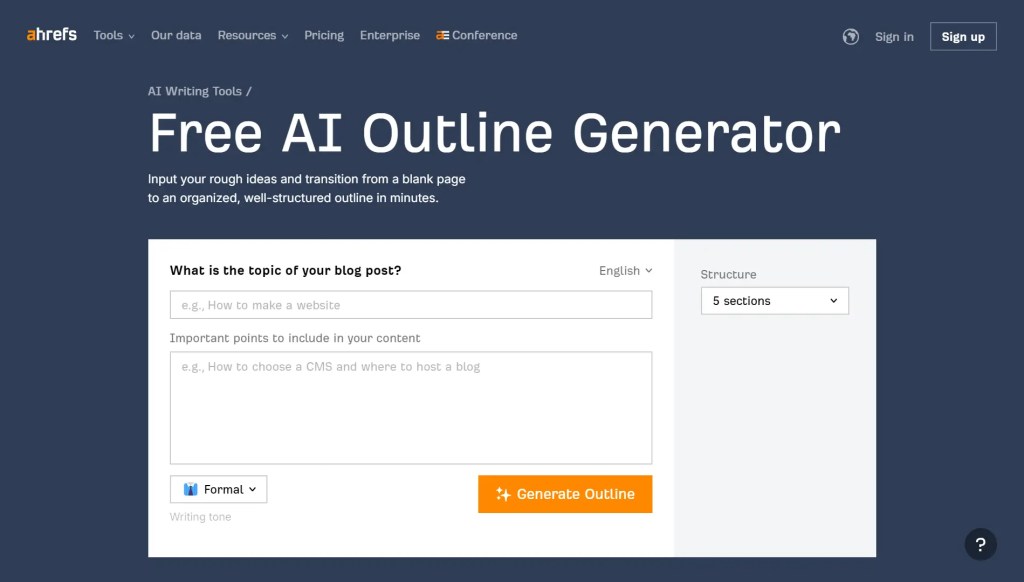
Various AI tools help you create an outline for your writing steps.
Dropner Blog uses the outline generator from Ahrefs because it offers various writing options and has quickly delivered good results for us.
#3. Generating Data-Driven Insights
High-quality, long-form content should be backed by data, research, and factual evidence. However, don’t take any data or statistics from AI tools for granted. They may provide inaccurate information that can hurt your site’s reputation.
Instead, you can find case studies, reports, or research papers related to your content. Then, ask AI to extract key takeaways. AI tools also excel at presenting information in a digestible way. So, it can save countless hours and stay efficient.
Well-researched and data-backed content builds trust with readers and boosts SEO rankings. Remember to include your references or put backlinks to the source you’re referring to.
#4. Personalizing Content for Different Audiences
AI can help tailor your long-form blogs to different audience segments. This strategy can increase the engagement and relevance of your content to the readers.
Tools like HubSpot and Persado analyze user behavior to suggest different messaging approaches for various demographics. Meanwhile, you can modify tone, style, and examples to suit different reader personas.
If necessary, do the A/B testing with AI. This technology predicts which headlines, introductions, or CTAs will perform best to help you refine your content for maximum results and impact.
#5. Avoiding TL;DR
Long-form content is valuable, but how can you be sure that readers get the key takeaways?
Long content is risky. It may be overwhelming to readers, making them bounce before getting the essentials.
In this case, you should structure your content for skimmers. You can provide concise summaries and break your content into shorter paragraphs.
Bullet points and subheadings are also useful for balancing reading.
Read this blog post about balancing SEO and readability.
Consider adding interactive content suggestions. AI-powered plugins (like chatbots or dynamic FAQs) can help readers navigate long content more efficiently.
These ways make your content less intimidating and more engaging.
#6. Repurposing Long-Form Content
Use AI to repurpose long-form pieces. It can transform long-form blogs into multiple content formats to extend their reach and impact.
For example, turn-key insights from a blog into bite-sized social media posts, Twitter threads, or LinkedIn carousels.
Repurposing makes sure that your effort in writing long-form content pays off across multiple platforms.
Other ways to repurpose your content are turning valuable sections into engaging motion graphics, infographics, and email campaigns.
Takeaway
AI is transforming content creation, and we must embrace it. However, the key isn’t to replace human creativity with AI but to use AI strategically to leverage its strengths.
While AI can enhance efficiency, streamline research, and optimize for SEO, it should never come at the cost of depth, originality, and meaningful storytelling.
True impact comes from well-researched, insightful content that resonates with readers on a human level—something AI alone cannot achieve.

 Dropner Graphic Explainer