

Written By Bonny Isselt.
Introduction to WordPress Mistakes That Ruin Your Blog
Are you struggling to make your WordPress website work for your marketing efforts? Despite its user-friendly interface and countless plugins, there are still common WordPress Mistakes That Ruin Your Blog that many marketers make when using WordPress as a marketing tool.
WordPress is one of the most popular website platforms for businesses and bloggers alike. However, it can be easy to make mistakes that hinder your marketing success. With so many features and options available, it’s important to understand how to use WordPress effectively for your marketing goals.
If you want to maximize the marketing potential of your WordPress website, it’s essential to avoid common mistakes that could be holding you back. From poor SEO practices to neglecting mobile optimization, there are several factors to consider when using WordPress for marketing purposes. In this article, we will explore five common WordPress marketing mistakes and how to avoid them.
Overview
- In this blog post, we will discuss common mistakes when neglecting them and the negative impact on WordPress sites.
Table of Contents
- Introduction to WordPress Mistakes That Ruin Your Blog
- Mistake 1: Neglecting SEO Best Practices
- Mistake 2: Failing to Optimize for Mobile Devices
- Mistake 3: Ineffective Call-to-Action (CTA) Placement
- Mistake 4: Neglecting Content Quality and Consistency
- Mistake 5: Failing to Track and Analyze Website Data
- Conclusion
Mistake 1: Neglecting SEO Best Practices
Consequences of Poor SEO for Blog Visibility and Organic Traffic
Poor SEO can have detrimental effects on a blog’s visibility and organic traffic. Without proper optimization, search engines may struggle to index the blog’s content, leading to lower rankings in search results.
This can result in decreased organic traffic as the blog may not appear prominently for relevant search queries.
Additionally, poor SEO may hinder the blog’s ability to attract and retain organic traffic, impacting its overall visibility and audience reach. In essence, neglecting SEO can significantly hamper a blog’s visibility and organic traffic potential.
Here is a list of seven things you must learn to do.
1. Not Making Your Site Mobile-Friendly: If your website isn’t optimized for mobile, you’ll annoy users and miss out on better search rankings.
2. Ignoring the Importance of Quality Content: Stuffing your site with keywords instead of offering real value will hurt your visibility on search engines.
3. Forgetting About Page Speed: People won’t wait for your slow site to load, and search engines won’t like it either.
5. Using Non-SEO Friendly URLs: Messy URLs confuse search engines and make your site harder to find.
Google says about the URL.

6. Skipping Title Tags and Meta Descriptions: You’re missing out on clicks and search engine love if you don’t bother with these. Read more about Adding Title tags and Meta Descriptions in this blog post.
7. Not Optimizing Images: If you’re not naming your images well, adding alt tags, and optimizing their size, you’re making it harder to rank well in search. Read how to edit alt tags in WordPress.
Mistake 2: Failing to Optimize for Mobile Devices
Making your website look and work great on mobile devices is super important. When your site is easy to use on phones and tablets, people have a better time checking it out.
Plus, search engines like Google prefer mobile-friendly sites, so it helps your site show up higher in search results. So, paying attention to mobile optimization is a big deal for keeping visitors happy and getting more traffic from search engines.
Statistics and Examples of Neglecting Mobile Devices
Neglecting mobile devices can have significant negative effects on businesses and websites. Here are some key statistics and examples that highlight these repercussions:
- Mobile Traffic: With the increasing usage of smartphones and tablets, mobile traffic accounts for a substantial portion of overall internet traffic. Reports indicate that nearly 53% of internet traffic worldwide comes from mobile devices, emphasizing the importance of catering to mobile users.
- User Experience: Failing to optimize a website for mobile devices can lead to a poor user experience. Research shows that approximately 57% of users are unlikely to recommend a business with a poorly designed mobile site, further underscoring the impact of neglecting mobile optimization.
- Conversion Rates: Neglecting mobile devices can directly impact conversion rates. Studies reveal that roughly 87% of users who have a negative experience on a mobile site are unlikely to return, potentially resulting in lost sales and revenue for businesses.
- Mobile-Friendly Practices: Companies that prioritize mobile-friendly practices tend to perform better. For instance, a case study of a retail website demonstrated a 160% increase in conversion rates after implementing a mobile-responsive design, showcasing the tangible benefits of addressing mobile device neglect.
In conclusion, neglecting mobile devices can lead to missed opportunities, reduced user satisfaction, and diminished business performance. Businesses and websites must prioritize mobile optimization to effectively engage and retain a diverse audience.
Mistake 3: Ineffective Call-to-Action (CTA) Placement
Discuss the influence of CTA placement on conversion rates and user engagement
Provide best practices for optimizing CTA placement and examples of ineffective strategies
Mistake 4: Neglecting Content Quality and Consistency
Emphasize the significance of high-quality, consistent content for audience engagement and brand credibility
Neglecting content quality can significantly hinder a blog’s success. Poorly written, irrelevant, or unoriginal content can lead to reduced reader engagement, lower search engine rankings, and a negative impact on the blog’s reputation.
In contrast, high-quality, valuable content can attract more readers, improve search visibility, and establish the blog as a reputable source of information. Therefore, focusing on content quality is crucial for achieving success in the blogosphere.
A Common Mistake Is Not Having Structured Menus
We see them a lot on a site with a bunch of pages, but we do not know what the site is about.
The navigation needs to be easy to understand for visitors. We have a straightforward navigation where all the pages are grouped together to avoid confusion.
Your site navigation must be structured easily so visitors can find their way around your site.
👍 What you need to do is to keep your menu simple and organized.
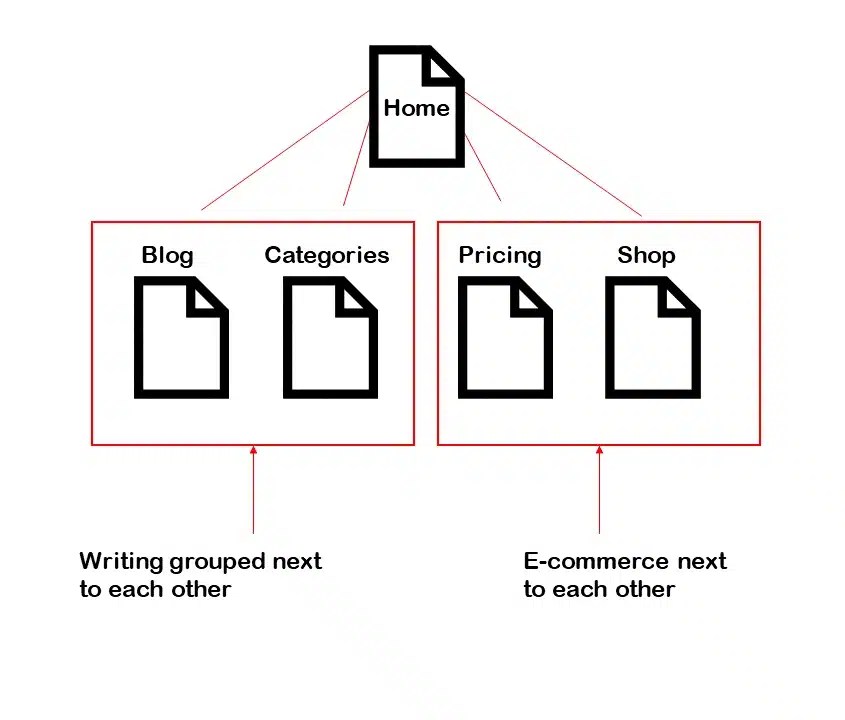
Google talks about how to organize and design the menus and links on a website.

Mistake 5: Failing to Track and Analyze Website Data
Discuss the importance of data analytics for making informed marketing decisions
Provide examples of the negative effects of neglecting data tracking and analysis
Conclusion
Summarize the impact of these mistakes on blog performance and marketing success
Encourage readers to avoid these common pitfalls and implement best practices for WordPress marketing

 Dropner Graphic Explainer
Really interesting!
Thanks a lot