

Written by Foster Martyn. Edited and published by Bonny Isselt.
Hi bloggers and recent followers,
You’ve been here before. A launch date moves up, a client wants a mockup by tomorrow, or your latest post just looks naked without a header image.
You open your usual design tool, stare at a blank
canvas, and realize the gap between “idea in my head” and “finished graphic on screen” is wider than your afternoon allows.
This situation isn’t really about talent. It’s about time, iteration, and the fact that most visual work requires seeing several rough versions before the right one clicks. Let’s walk through how to handle it without burning your whole day.
Why Fast Visual Work Feels Harder Than It Should
The real bottleneck usually isn’t drawing or arranging elements. It’s decision fatigue. You don’t know exactly what you want until you see a few options that are wrong in useful ways.
A designer earns their fee partly by absorbing that back-and-forth for you. Without one, you’re doing rounds of trial and error solo, which eats hours.
The fix isn’t to skip the exploration phase. It’s to compress it. That means generating rough visual directions quickly, rejecting most of them fast, and only polishing the one or two that actually work.
Think of it like sketching before painting: nobody expects the first pencil lines to be the finished artwork, but everybody benefits from having them down early.
A Practical Way to Approach It
Before touching any tool, it helps to separate the job into three smaller decisions:
1. Purpose?
Is this for a social post, a product mockup, a storyboard frame, or an early brand asset draft? Each has different tolerance for imperfection.
2. Reference point?
Do you have an existing object, product, or logo that needs to appear consistently, or are you starting from a blank prompt?
3. Finish level?
Does this need to be publish-ready today, or is it a placeholder you’ll refine later?
Answering these first prevents the common trap of generating dozens of images without a clear filter for what “good enough” looks like.
If you’ve ever lost an afternoon to tweaking a graphic that was never going to be used, you already know why this filter matters.
Hypothetical Worked Example
Say you run a small candle business and need a product mockup for a seasonal scent launching next week.
You don’t have studio photography ready yet, but you want to test three label designs against a lifestyle background before committing to a photoshoot.
In this hypothetical scenario, you’d start with your purpose (marketing test, not final asset), your reference (a rough label sketch or existing packaging photo), and your finish level (this is for internal decision-making, not the final ad).
With those three answers settled, you could generate a handful of rough scene variations, compare them against your candle’s actual branding, and pick a direction before spending money on real photography.
The output wouldn’t be your final campaign image, but it would tell you which visual direction to invest in.
Where an AI Image Tool Fits In
This is exactly the kind of exploration phase where an AI image generator can save real time, provided you treat it as a drafting tool rather than a finishing tool.
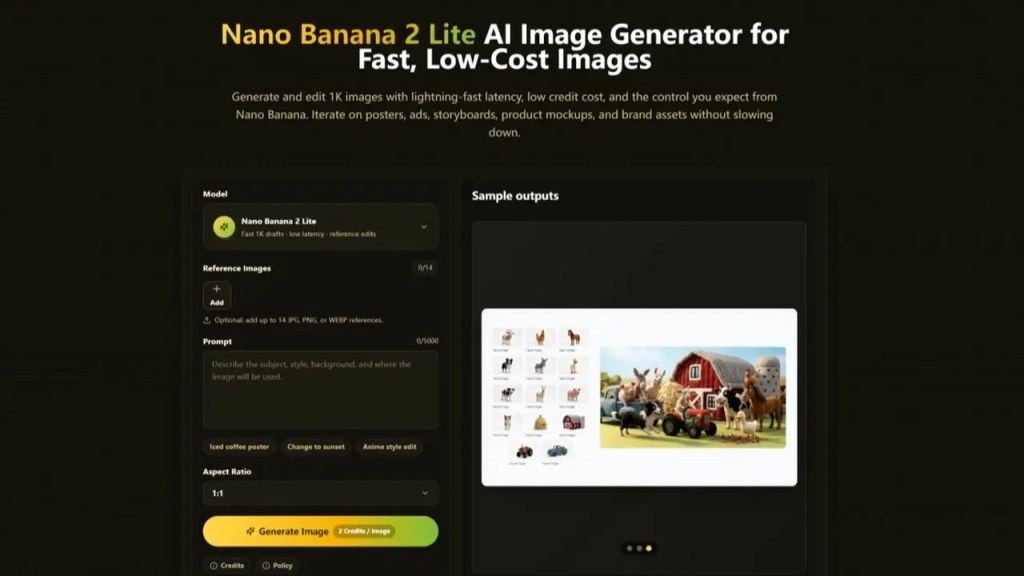
Sites built for this, like [Nano Banana
2 Lite] are designed around prompt-based creation and object-reference workflows, which suits the candle-mockup scenario above: you feed in a description or a reference object, and you get several visual directions to react to instead of one blank page to stare at.
Worth noting: this is a third-party, independently operated tool site, not an official Google or DeepMind product, so it’s best evaluated on its own merits rather than assumed to carry any official backing.

Nano Banana 2 Lite
Used this way, the tool becomes one option among several for the rough-draft stage alongside sketching, stock imagery, or a quick mood board, not a replacement for the judgment calls that come next.
The same way a writer outlines before drafting the final copy, a visual thinker can generate direction before committing to a finished design.
Where It Breaks Down (and How to Correct For It)
No fast-generation approach is a full substitute for intentional design work, and it helps to know where the cracks show up.
Here are some useful tips from Foster Martyn to help you with AI! (Tap on it to get the problem-solving answer).👇👇👇
You generate an image, love the overall vibe, but the
fine details, text legibility, exact brand colors, and precise object proportions are off.
Treat the output as a layout or mood reference, then rebuild the final asset in a proper editor where you control those details precisely.
You expect a single generation to match a very specific existing product photo pixel-for-pixel.
Lower the expectation to “close visual direction” rather than “exact replica,” and use the object-reference workflow as a starting point, not a final answer.
You skip the purpose/reference/finish-level questions from earlier and just start prompting randomly.
Go back to those three questions before generating anything; they’re what keeps the exploration phase from turning into an unfocused time sink.
If you’re also in the middle of keeping a blog alive while doing all of this, you might recognise the same pressure in a different form.
Blogging has its own version of the blank-page problem, and the mindset for getting through it is worth reading about in [How To Overcome A Blog Meltdown]; the same principle of separating the scary blank moment from the actual work applies to visuals just as much as to words.
A Quick Decision Checklist
Before your next fast-turnaround visual task, run through this:
- What is this image actually for, and who sees it first?
- Do I have a reference object, photo, or sketch to anchor the concept?
- Is this a draft for internal decisions or a publish-ready final?
- Will I need to rebuild fine details in a separate editor afterward?
- Have I set a time limit for the exploration phase so it doesn’t stretch all day?
Going through these five points takes under a minute and usually saves far more than that once you start generating.
The checklist works whether you are creating a single header image or a whole set of social graphics for the month.
Wrapping Up
The pressure of needing a visual right now doesn’t have to turn into a wasted afternoon. Separate your task into purpose, reference, and
finish level, use a fast drafting tool for the exploration stage, and expect to hand-finish anything that needs precision.
That combination, not any single tool, is what actually gets you from blank page to usable graphic without the usual friction.
Whether you’re testing three product mockups before a photoshoot,
building a storyboard before a video shoot, or just trying to get a
decent header image up before your post goes live, the workflow stays the same: clarify the decision you’re actually making, generate rough directions quickly, pick one, and refine it properly.
The tool changes from project to project, but the discipline of separating exploration from finishing is what keeps the whole process fast.
Author bio: Foster Martyn, digital marketer interested in AI tools for creative workflows and content publishing.
 Dropner Graphic Explainer